Field Guide / Hunting Tips
North Carolina Turkey Season 2026: Dates & Bag Limits






North Carolina's 2026 spring turkey season opens in early to mid-April with a season bag limit published by the North Carolina Wildlife Agency. Fall turkey runs in October-November where offered.
Hunters need a North Carolina hunting license, a turkey-specific permit (in most states), and HIP registration. Confirm exact dates and bag limits on the state agency site for the current year.
North Carolina, a true turkey hunter's dream, boasts over 2 million acres of breathtaking public land. This diverse landscape, nurtured by a robust wildlife restoration program, sets the standard for thrilling hunts of big gobblers in the southeast.
Knowing when the season opens, the landscape, and some location-specific turkey-hunting tips can help you become a more well-rounded turkey hunter and hit your limits. Let's take a look at when the NC turkey season opens and some tips to help you find hunting land and get your gobblers this season.
Updated May 18, 2026
When Does the Turkey Season Start in North Carolina in 2026?
The turkey hunting season in North Carolina is divided into a general and a youth window.
North Carolina Turkey Season 2026 | |
| Youth Season (Male or Bearded Turkey Only): April 4 – 5, 2026 | Statewide Spring Season (Male or Bearded Turkey Only): April 12 – May 9, 2026 |
| This is the open season for youth under 18 to hunt statewide. A permit may be required in some game lands. Each youth must carry a big game harvest report card and report harvests according to instructions. If exempt, they must report using a big game harvest report card for license-exempt hunters. | This is the general season for youth and adult hunters. |
What Are the Bag Limits?
Each hunter in North Carolina can take only two turkeys during the season and only one during youth. This means if a turkey hunter took one during the youth season, they can only take one during the youth season.
Restrictions
You may not use a handgun or rifle to hunt wild turkeys in North Carolina. Additionally, taking wild turkeys from within 300 yards of a baited location is similarly unlawful–an area is considered baited until ten days after the bait is consumed.
Hunting License and Reporting
With a North Carolina hunting license and a big game harvest report card, hunting wild turkeys in North Carolina is legal during the designated seasons. You must mark the big game harvest report card by a notch or cut to indicate the date the turkey was taken. What to Know About Turkeys in North Carolina
Large-scale restoration efforts from the mid-1900s saw turkey numbers grow from near elimination to stable, thanks to the dedicated work of the North Carolina Wildlife Resources Commission (NCWRC).
This conservation success story is why hunters today in the North Carolina region can enjoy hunting the eastern wild turkey, one of the most popular options for game hunting during the NC hunting season.
How to Plan Your North Carolina Turkey Hunt
With dates and bag limits in mind, it's time to plan your hunt! Follow the steps below to plan a successful hunt.
| How to Plan a Turkey Hunt in North Carolina: |
|
Hunting the Eastern Wild Turkey
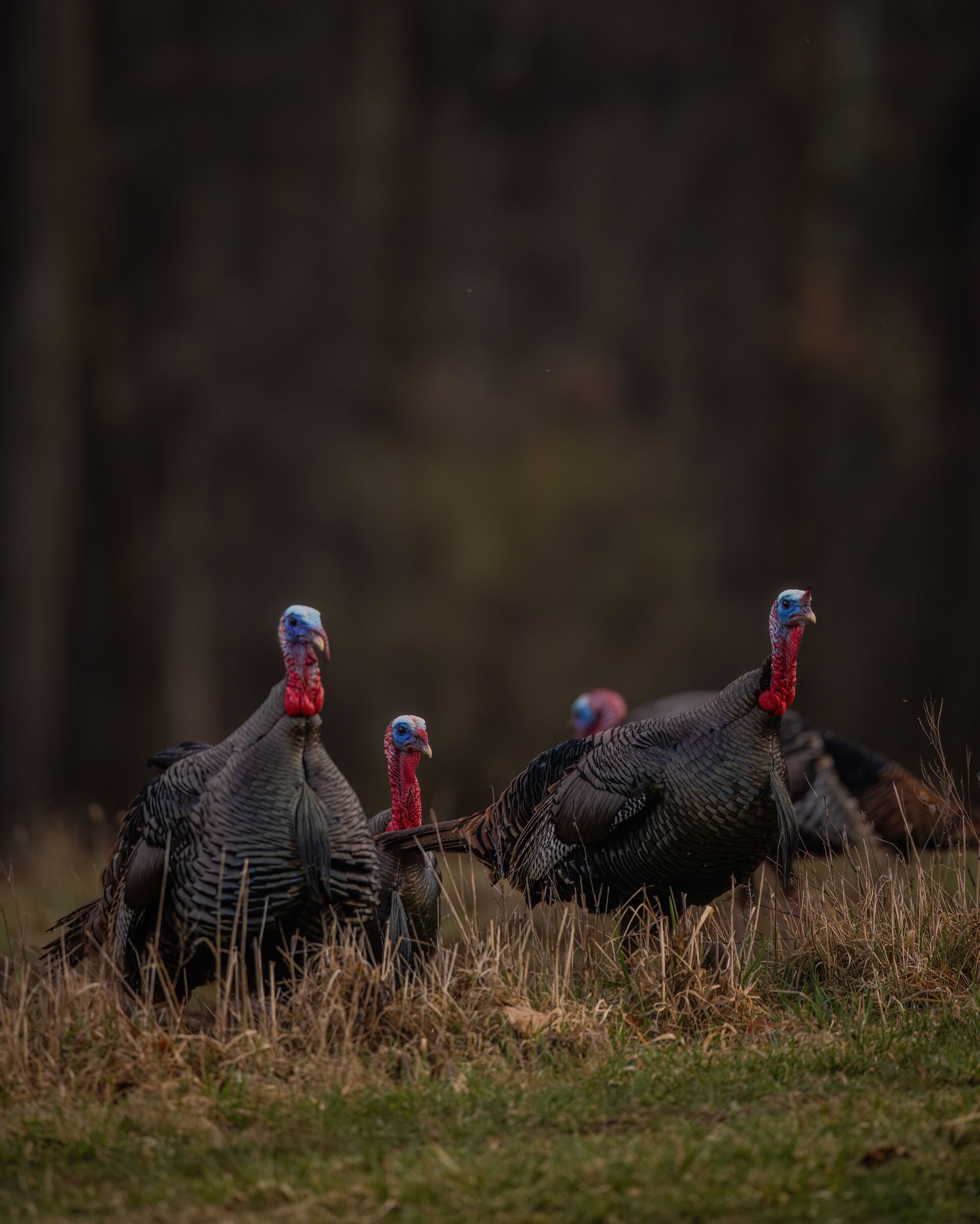
The eastern wild turkey is a large game species in North Carolina and is characterized by a chestnut-brown coloration on the tail, a distinctively strong gobble, and the longest beard of all subspecies.
They are the primary wild turkey species hunted and native to North Carolina, and are defined by several characteristics, including:
- Habitat: These wild turkeys will opt for a blended habitat of open and closed terrain, roosting higher up in branches away from predators with a preference for large hardwood trees. For foraging, they're commonly found in open grassland and brushy areas.
- Diet: They're omnivorous eaters chowing down on seeds, fruits, insects, and small vertebrae, most of which come from vegetation. They're most active during the morning and late afternoon when feeding.
- Behaviors: Eastern wild turkeys are profoundly social and will form male-dominant flocks with a top-down hierarchical structure. Highly vocal, they're known to display a wide range of vocalizations for mating, territorial defense, and social cohesion—it's said you can hear their gobble up to a mile away.
- Breeding: Breeding typically occurs in spring, with April and May as the two top months for active breeding.
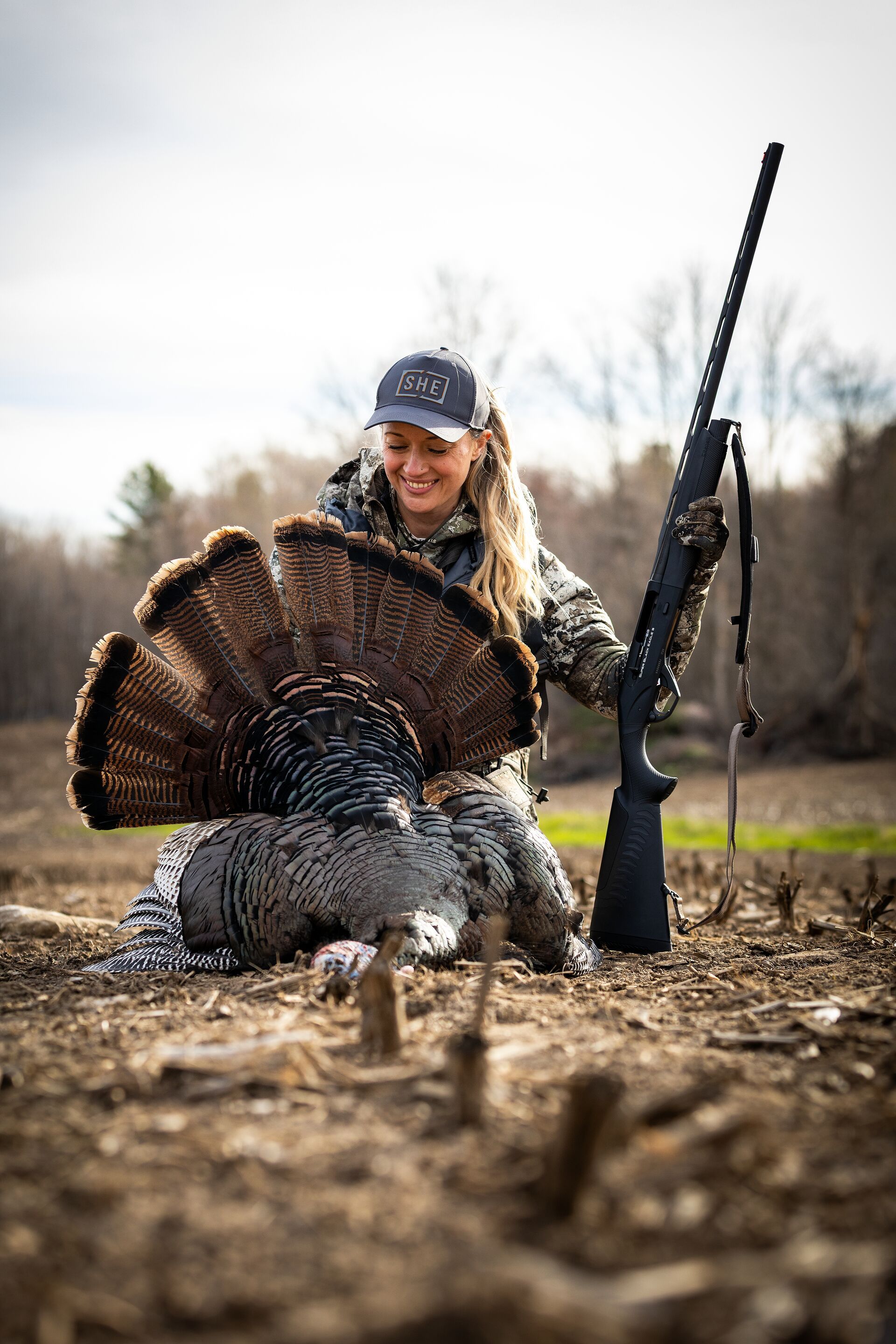
While the numbers and conservation efforts were a great success, ongoing vigilance against illegal hunting, habitat preservation, and monitoring of turkey numbers is essential to maintaining ecological balance and keeping the hunting seasons open for many more years.
4 Turkey Hunting Tips for North Carolina
Here are four top tips to help you tag out this North Carolina season.
1. Know When to Hunt
When is the best time to hunt turkeys in North Carolina? In general, getting out early in the morning (while it's still dark) or in the late afternoon are the best times to increase your odds of bringing home a turkey.
Turkeys are most active during these times, either emerging from their overnight roosts or heading into the roost for the evening.
2. Use Decoys at the Right Time
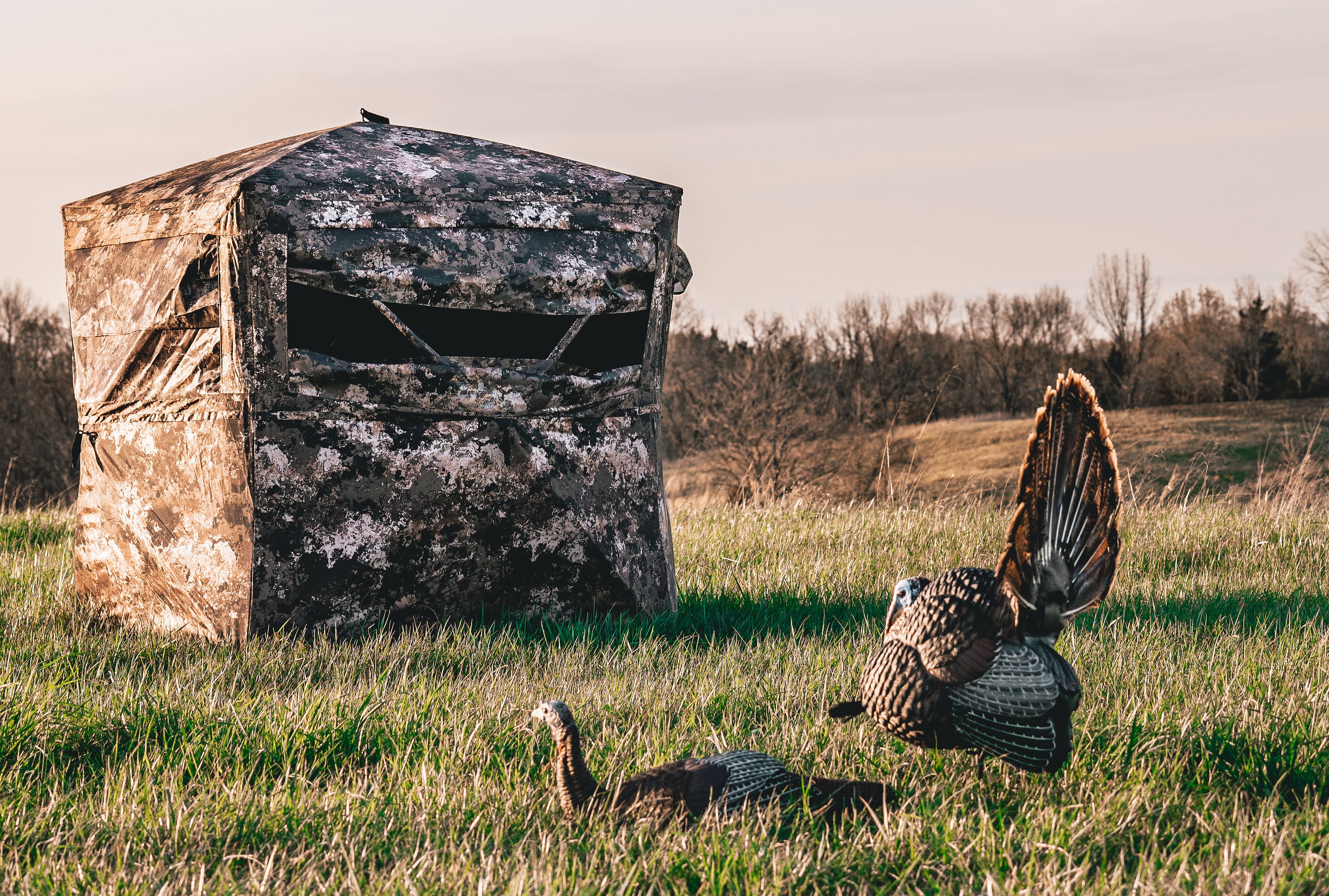
As the season falls during mating time, using hen decoys, particularly in the early morning when turkeys are most active and vocal, can be highly effective. Aim to have your hen decoys set up just before sunset.
3. Use a Blind
Eastern wild turkeys have highly attuned eyesight, meaning patterning and a natural feel to your blind are essential for it to be effective. Enhance the camouflage by adding branches and leaves from your surrounding area.
4. Use the HuntWise App to Scout Land
With a short NC turkey season and a bag limit of two birds, you want to give yourself the best opportunity to tag out. This means scouting turkey-dense areas that provide the right level of cover and are close to water sources where turkey traffic will be highest.
With HuntWise map layers, you can flag large hardwood and open wooded areas using high-definition satellite, topographic, and terrain views, gaining an edge on the season and making the most of it.
Get Ready for NC Turkey Season With HuntWise
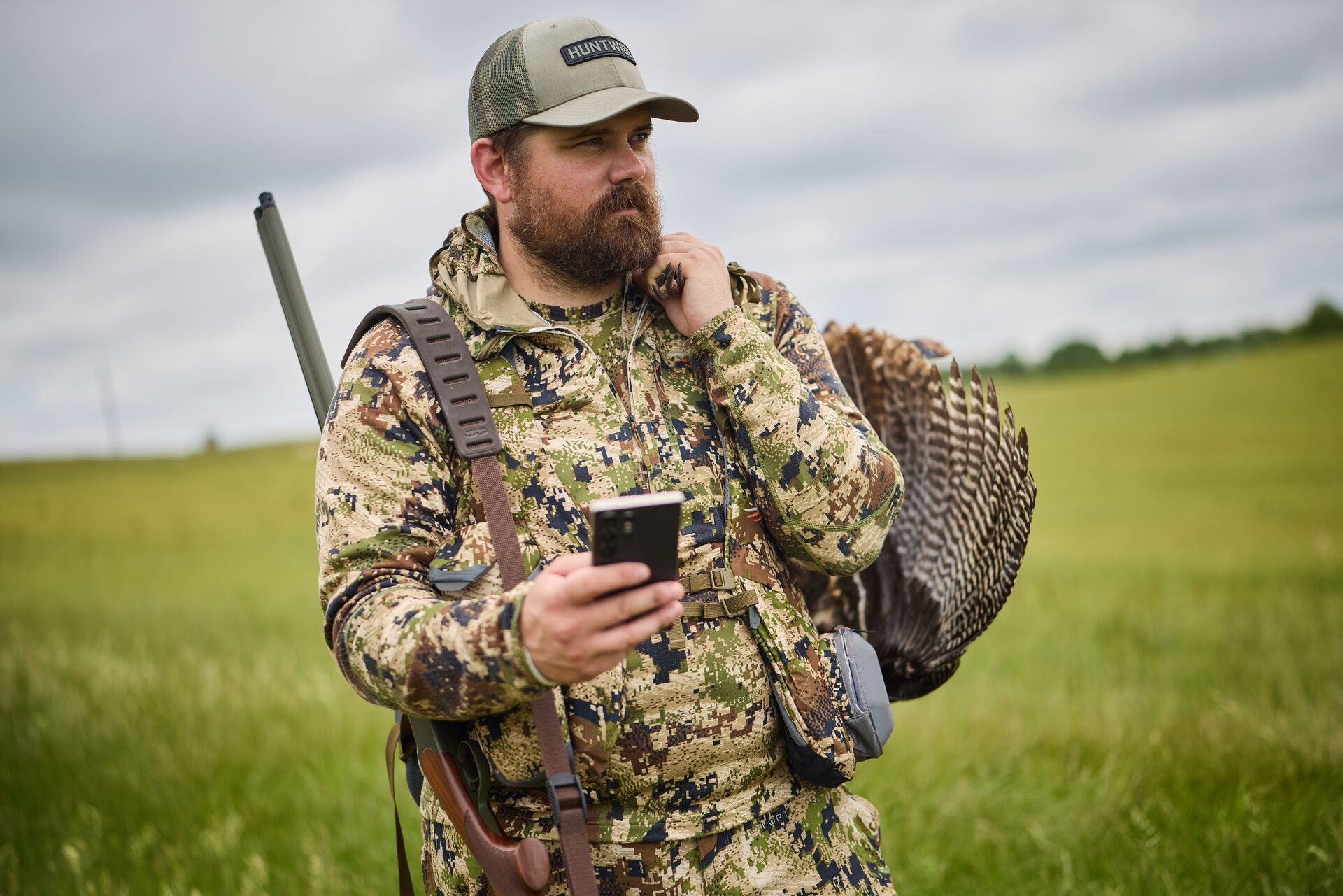
Prepping the blind, laying out the decoys, and making some sweet music on the callers is what the turkey season is all about. There's nothing like being out in the breathtaking natural landscape of North Carolina during peak turkey season—apart from taking a couple home for the freezer.
Whether you're a North Carolina local or coming from interstate with HuntWise, you'll start every cool morning in a turkey hotspot, giving yourself the best chance to tag out this NC season.
Maximize your time in the field with our species-specific prediction capabilities for your hunt areas. You can also mark roosting areas and traffic corridors by placing pins in the app, then return directly to those areas to set up your blind and catch turkeys as they move to and from their roosts.
Get an edge on other turkey hunters in North Carolina this season!
Download HuntWise and try it for free for a week.
Previous in Hunting Tips
More Content Like This
Whitetail Deer: How to Find and Hunt on Public Land
A successful whitetail deer hunt on public land requires many things, but resilience and knowledge play the most crucial role. Whitetail scouting on public land requires a tactical and focused skill set acquired by maneuvering a variety of changing v...Read More
Read More
Ethics in Hunting: 9 Principles Every Hunter Should Follow
Hunting is more than just a sport — it's a tradition rooted in respect for wildlife, the environment, and the communities around us. How we behave as hunters is essential to public perception of the hunting community and ensuring this lifestyle's end...Read More
Read More
The Year-Round Hunter in February: Where to Find Deer Sheds
As the next part in our series about the Year-Round Hunter, we wondered what you should be doing in February. "Hunting" doesn't have to be limited to spring turkey or fall deer hunts — so what can you do while waiting for winter to end? Read More
Read More- Hunting Tips
Whitetail Deer: How to Find and Hunt on Public Land
A successful whitetail deer hunt on public land requires many things, but resilience and knowledge play the most crucial role. Whitetail scouting on public land requires a tactical and focused skill set acquired by maneuvering a variety of changing v...Read More
Read More - Hunting Tips
Ethics in Hunting: 9 Principles Every Hunter Should Follow
Hunting is more than just a sport — it's a tradition rooted in respect for wildlife, the environment, and the communities around us. How we behave as hunters is essential to public perception of the hunting community and ensuring this lifestyle's end...Read More
Read More - Hunting Tips
The Year-Round Hunter in February: Where to Find Deer Sheds
As the next part in our series about the Year-Round Hunter, we wondered what you should be doing in February. "Hunting" doesn't have to be limited to spring turkey or fall deer hunts — so what can you do while waiting for winter to end? Read More
Read More
1 of 3