Field Guide / Turkey
Michigan Turkey Season 2026: Spring & Fall Dates





Michigan's 2026 spring turkey season opens in early to mid-April with a season bag limit published by the Michigan Wildlife Agency. Fall turkey typically runs in September–November, where offered.
Hunters need a Michigan hunting license, a turkey-specific permit (in most states), and HIP registration. Be sure to confirm exact season dates and bag limits on the state agency site for the current year.
Blue skies, budding greens, and early morning mist can only mean one thing in Michigan: Spring has arrived. For hunters, the shift in temperature, the vibrant plantlife, and the chorus of birdsong herald a different kind of season, the start of the Michigan turkey season.
That first electrifying gobble of the season is a moment of pure anticipation. With a vast 7.4 million acres of forest open on public hunting land in the Lower and Upper Peninsula, the 2024 season promises unforgettable hunting experiences for Michigan hunters.
Here's everything you need to know about the Michigan turkey season dates, plus some expert strategies to help you tage bag your bird.
Updated May 19, 2026
When Does The Turkey Season Start in Michigan?
Michigan offers both a Spring and Fall season to ticketed hunters. Always check the Michigan DNR website for the latest dates and regulations.
Michigan Turkey Season 2026 | |
| 2026 Spring Turkey Season | Fall Season 2025 (2026 dates pending) |
|
|
| Hunt 0234 (Statewide): May 2 – 31, 2026 | |
The Licensing, Compliance, and Drawing System
The Michigan turkey season is open to residents and non-residents who receive a license through a draw system or general permit. Here's what you need to know.
Licensing Quota
In many turkey management units (TMUs), licensing is administered through a random drawing system.
Hunters can only apply for one spring turkey license. Licensing opens from January 1 to February 1 and is only valid for your selected TMU. You must be at least ten years old to apply.
If selected, you can purchase the license, and as an applicant, the onus is on you to search the registry to confirm if you have been selected for a ticket.
Hunt 0234
Hunt 0234 is another licensed option for a spring turkey hunt, which is a purchased option that allows greater flexibility as a statewide guaranteed license. This license offers the flexibility to hunt in more than one location. It also allows for more than seven days to find and bring home a tom.
Leftover Licensing
Some leftover licenses are available on March 18 at 10 a.m. Eastern Standard Time to fill the quotas. If you missed out on drawing a tag, this is your chance to purchase a license before the spring season ends.
Bag Limit
The bag limit is one bearded turkey for the season. You must have a license to grab your turkey.
How to Plan Your Turkey Hunt in Michigan
With the season dates in, it's time to start planning your hunt! Follow these tips to set yourself up for turkey hunting success.
| How to Plan Your Michigan Turkey Hunt: |
|
About Turkey Hunting In Michigan
The Michigan Department of Natural Resources and conservation groups brought back the wild turkey from near extinction in Michigan due to a concerted effort. In 1977, there were around 400 turkeys, and by 2014, thanks to a habitat-focused conservation and management effort, that number had risen to 30,000.
While the conservation efforts continue, it's worth noting that the Michigan season is relatively restrictive compared to other states. However, this doesn't mean that bagging a tom is impossible.
Mid-central Michigan has proven to be a haven for patient hunters, consistently providing successful turkey hunting experiences.
Regarding zoning, public hunting can take place on the forest land of both the northern Lower Peninsula and Upper Peninsula, as well as on private land opportunities.
All About the Eastern Turkey In Michigan
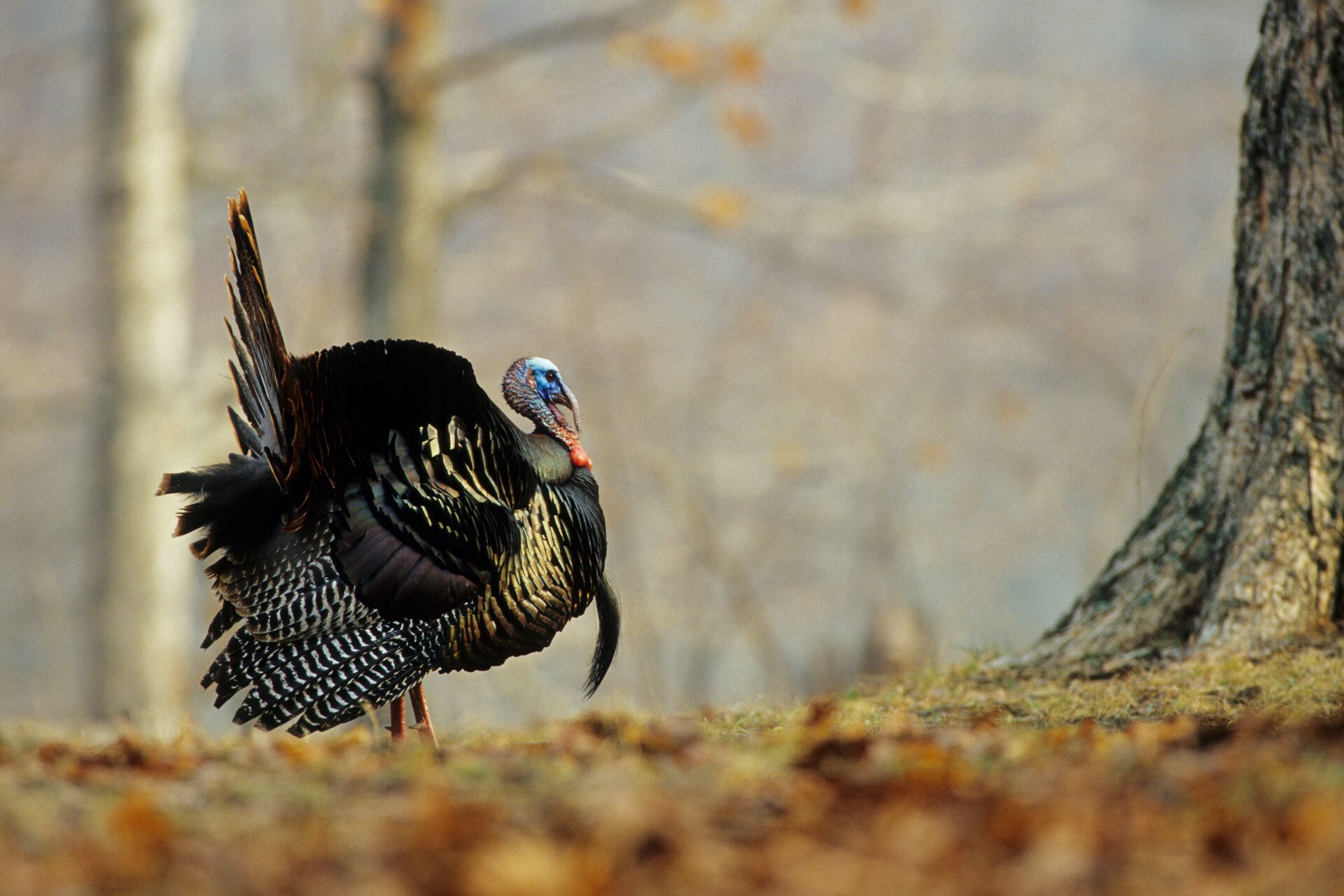
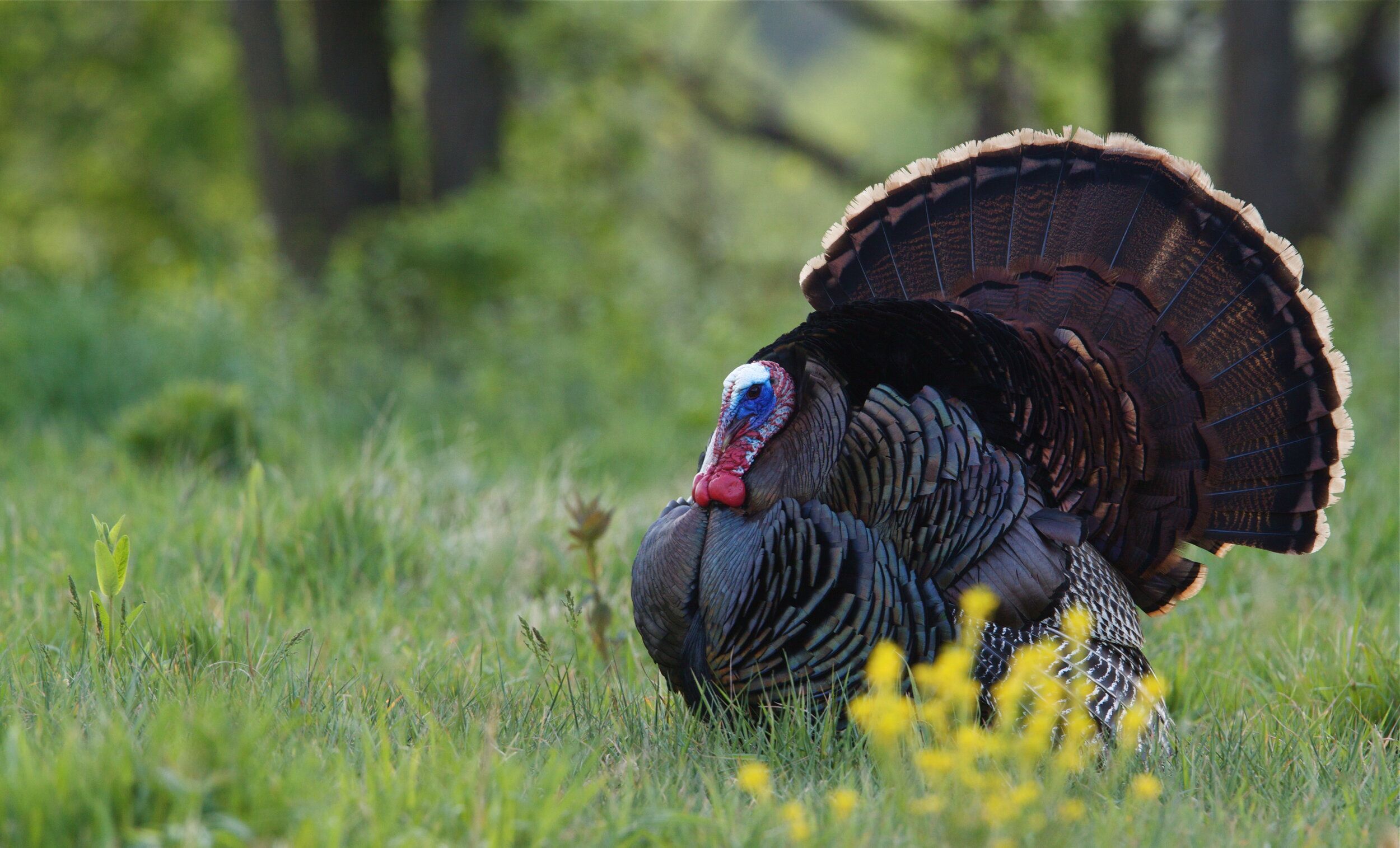
The primary species in Michigan is the Eastern turkey, which is known for its cautious nature. It is the most widely distributed turkey subspecies in the US.
Here are some additional facts about the Eastern turkey in Michigan to help you prepare for your hunt as the season arrives:
- Mating: As a northern state, turkey breeding in Michigan begins in late March and runs until early April to match the increasing daylight hours. Male turkeys (what we know as toms) will attract females by fanning their tails and puffing feathers.
- Diet: While the Michigan Eastern turkeys eat a relatively standard diet of nuts, berries, grasses, and insects, ongoing efforts from the National Wild Turkey Federation (NWTF) to work with private landowners saw them introduce winter-resistant turkey food plots of corn and grain mixes to provide readily available human-cultivated foods to their diet.
- Habitat: Eastern turkeys range from one to four square miles in a mix of fields, woods, and agricultural areas. They roost in trees and move from grasslands to forest clearings in search of mates, food, and water.
- Social and Behavior: Michigan turkey flocks range from 5 to 50 birds, usually consisting of only males or females.
Understanding the wild turkeys of Michigan can help you bring home a bird! Just make sure you hunt during the legal open seasons.
Use HuntWise to help you nail down the best times to hunt turkey in Michigan.
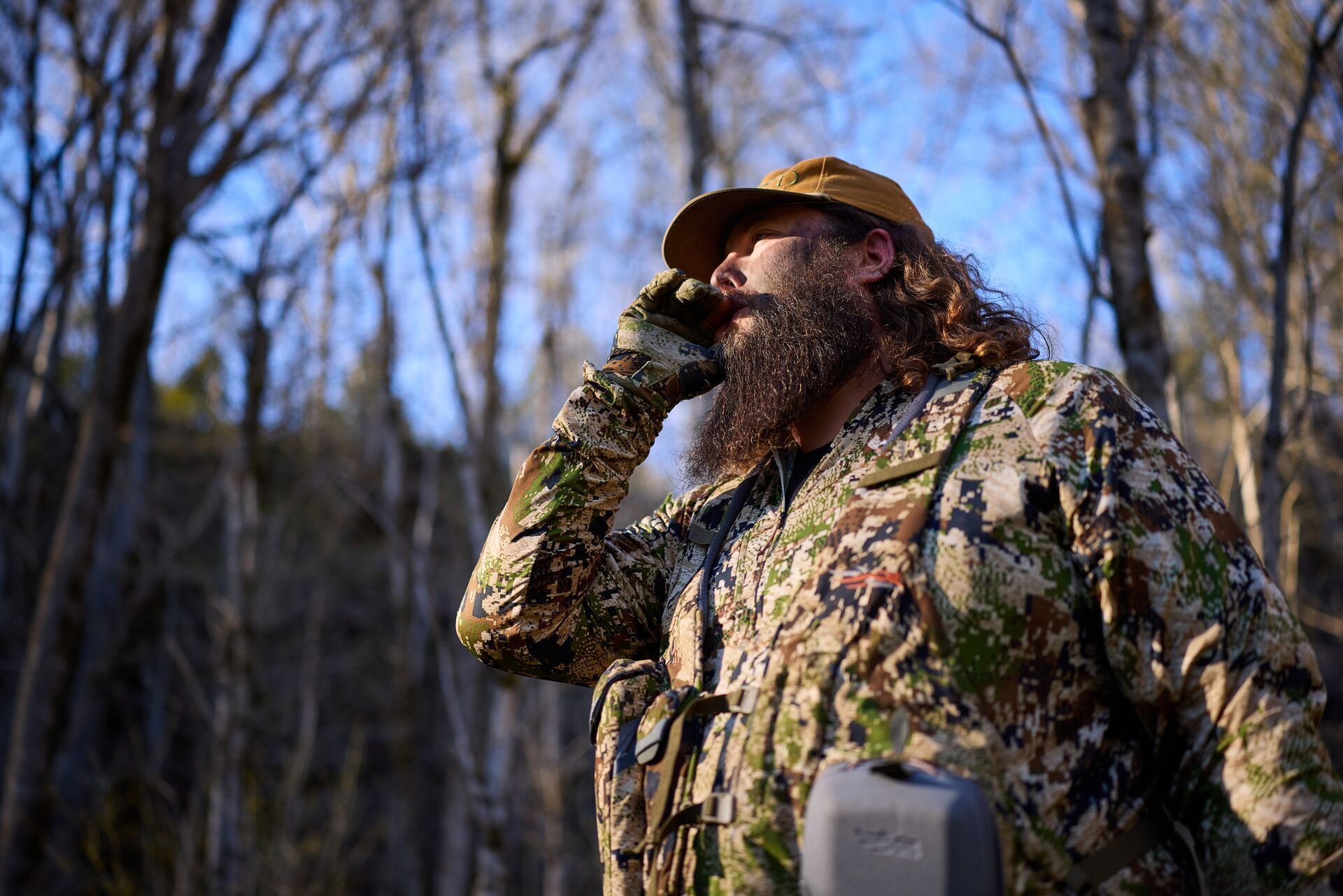
How to Improve Your Chances of Turkey Hunting Success in Michigan This Season
With only one permitted turkey per season, you want to make it count. Use these tips to maximize your chances of bagging a big bird.
Use Decoys and Calls
Practice a variety of calls, including yelps, clubs, and gobblers, to invite and challenge other birds and hopefully draw a gobbler into range.
Opt for a full-body decoy when hunting in open areas and only use it as a last resort if you're at a higher altitude. The birds top the hills quickly and tend to come into closer range, requiring a greater range of motion.
Use a Blind
Choose a blind that offers concealment while providing a clear view with only a minimal opening, as the Eastern turkeys are attuned to noticing even the slightest shifts in movement.
Considering the natural environment earlier in the season, you may find natural landscape coloration more brownish at the end of winter, whereas as the temperature rises, you may need to incorporate more greens into your patterning.
Use HuntWise for Location Scouting
Experienced hunters have their locations marked and blinds set up well before the season opens. This pre-season e-scouting is invaluable to gaining insights into where the birds are roosting, feeding, congregating, and tracking to water sources or socializing.
With HuntWise, you can find turkey-dense areas in public and private land classifications. You can also access private landowner information to get permission to hunt private land.

Use HuntWise to Hunt Michigan Turkey Season With Confidence
Whether to break the winter blues, spend time with loved ones, or fill your freezer with local, sustainable, and organic bird protein, the Michigan turkey season has something for everyone.
If you're one of the lucky ones who managed to draw a license, you'll want to give yourself the best chance of success. This means getting the lay of the land and using mapping technology to establish your hunting zones.
With everything from weather insights to topographical and aerial imagery, HuntWise delivers more than maps! You'll get a true feel for the Michigan terrain. You can also use markers to note roosts and turkey corridors so you can maximize your time in the field, from where you place your blind, and how you get to and from your spot from your truck.
Download the app today and use it free for a week for Michigan turkey season success!
Previous in Turkey
More Content Like This
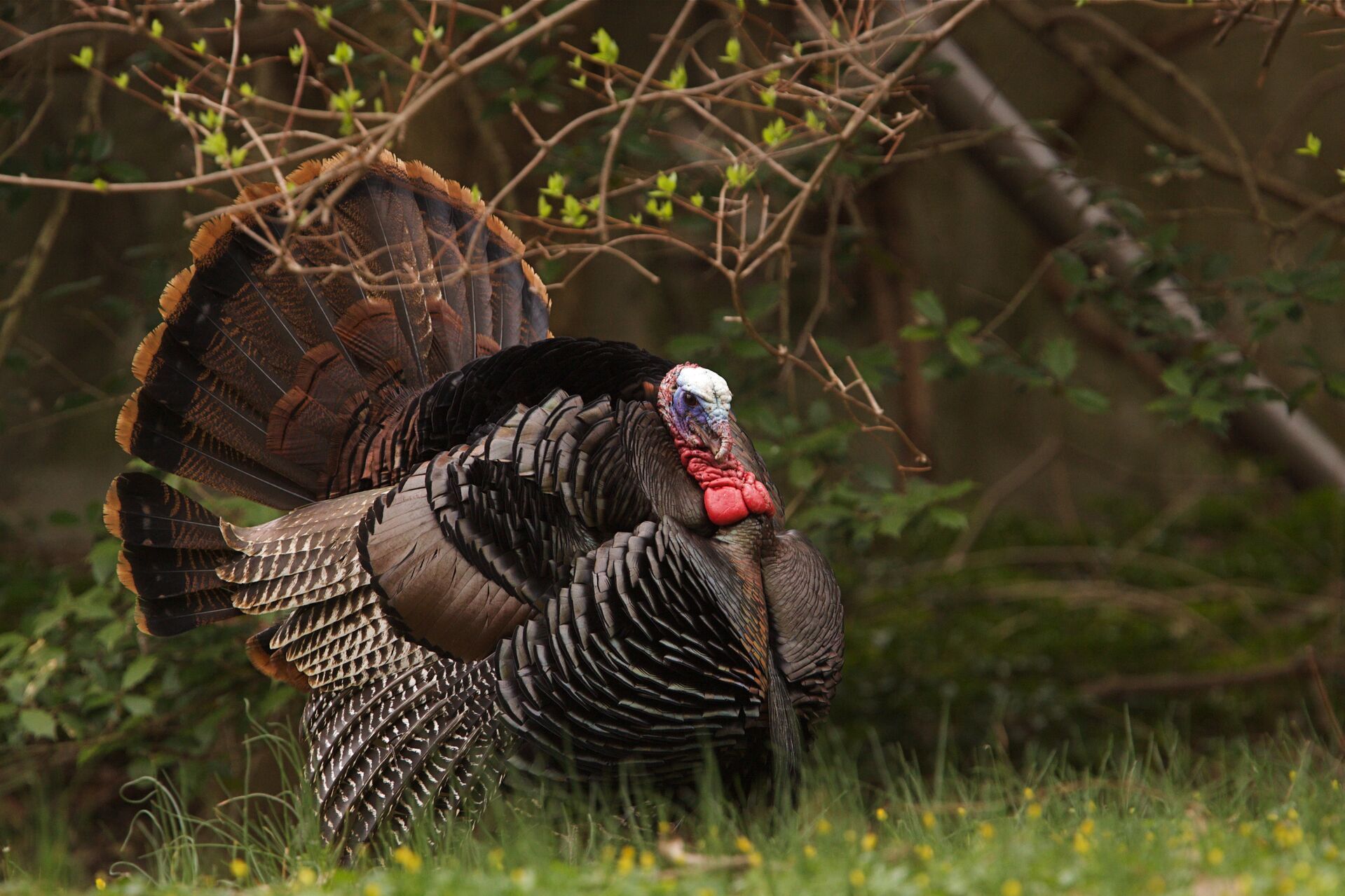
Turkey Talk: All About the Eastern Turkey
Few species captivate the imagination and hunting spirit of the American hunter more than the eastern turkey. With its stunning plumage, unique physical characteristics that set it apart from its Western counterpart, and adaptability to its homeland,...Read More
Read More
Alabama Turkey Season 2026: Dates & Bag Limits
The 2026 spring turkey season in Alabama runs from March 25 through May 8 for Zones 1 and 3, and from April 1 through May 8 for Zone 2. The bag limit is strictly one gobbler per day, with a maximum of four bearded turkeys for the combined spring and ...Read More
Read More
What to Wear Turkey Hunting in the Spring
With cool mornings, warm afternoons, and chilly evenings, putting together a spring turkey hunting kit can initially seem like a challenge. Luckily, the process is relatively straightforward. However, with some sensible layering, carefully selected ...Read More
Read More- Turkey
Turkey Talk: All About the Eastern Turkey
Few species captivate the imagination and hunting spirit of the American hunter more than the eastern turkey. With its stunning plumage, unique physical characteristics that set it apart from its Western counterpart, and adaptability to its homeland,...Read More
Read More - Turkey
Alabama Turkey Season 2026: Dates & Bag Limits
The 2026 spring turkey season in Alabama runs from March 25 through May 8 for Zones 1 and 3, and from April 1 through May 8 for Zone 2. The bag limit is strictly one gobbler per day, with a maximum of four bearded turkeys for the combined spring and ...Read More
Read More - Turkey
What to Wear Turkey Hunting in the Spring
With cool mornings, warm afternoons, and chilly evenings, putting together a spring turkey hunting kit can initially seem like a challenge. Luckily, the process is relatively straightforward. However, with some sensible layering, carefully selected ...Read More
Read More
1 of 3